In an age defined by illuminated skylines and glowing screens, true darkness has become a rarity. I discovered just how rare — and how powerful — it can be during a journey to rural west Wales, where I travelled to immerse myself in a growing wellness experience known as “star bathing.” What unfolded beneath the vast skies of Ceredigion was not just a stargazing session, but a profound reminder of humanity’s timeless connection to the cosmos.
Table of Contents
ToggleWaiting for the Night to Reveal Itself
The first thing that struck me was the darkness — or rather, the absence of what I had expected. When we arrived in the tiny hamlet of Gogoyan, clouds smothered the sky. There were no stars visible, only a thick grey canopy overhead. For a moment, I wondered whether the long drive had been in vain.
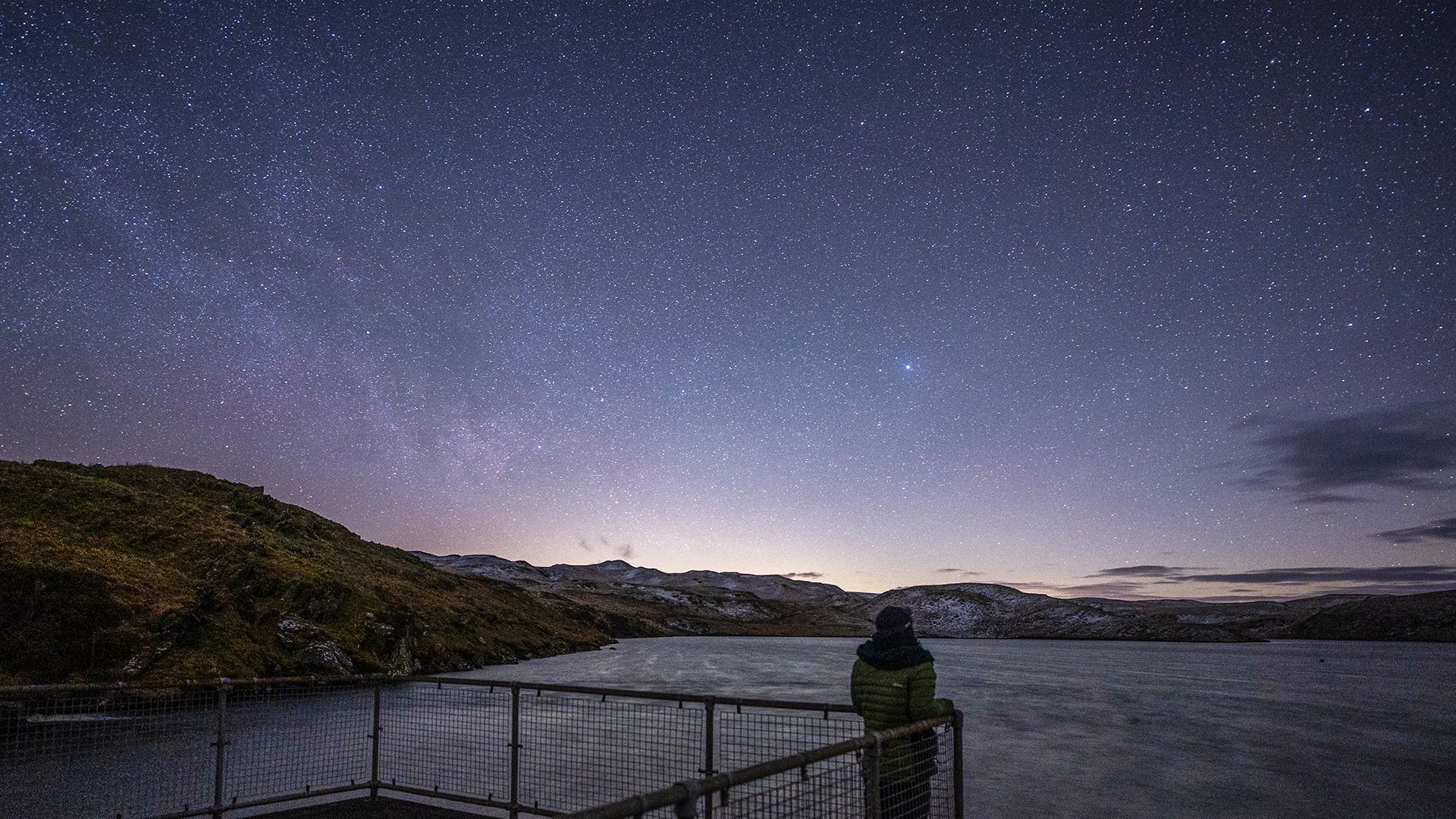
Four and a half hours later, at around 22:30, the transformation began. The clouds gradually parted, revealing a sky so densely scattered with stars that it felt almost surreal. They stretched as far as the eye could see, in every direction. For someone accustomed to urban living, where only a handful of stars compete with streetlights and neon signs, this felt like stepping into another world.
I was joined by Siân and James Harrison, passionate astronomy enthusiasts who had travelled from Cardiff for the experience. Our guide for the evening was Dafydd Wyn Morgan, founder of the astrotourism company Serydda, who has made it his mission to reconnect people with the night sky.
What Is Star Bathing?
Star bathing is inspired by the Japanese practice of forest bathing, which emerged in the 1980s as a way to encourage mindful immersion in nature. Instead of focusing on trees and woodland, star bathing invites participants to lie beneath the open sky, observe celestial bodies, and experience the emotional impact of the cosmos.
Wyn Morgan’s sessions combine storytelling, science, and quiet reflection. Using a smart telescope and a green laser pointer to trace patterns across the heavens, he guides participants through constellations, planets, and the myths tied to them. On this particular night, he highlighted Jupiter — one of the brightest objects visible — and pointed out the unmistakable alignment of Orion’s Belt in the constellation Orion.
For James, Orion holds special meaning. The region surrounding it is a stellar nursery, where new stars are constantly being born. “I’ll focus on something and it’ll be 150 million light years away,” he said in quiet awe. “I can’t quantify that.”
His words captured the essence of the experience. Star bathing is not about memorising astronomical data; it is about feeling the immensity of the universe and recognising our place within it.
A Deeply Human Attraction to the Sky
Humans have always been drawn to the stars. Long before artificial light diluted the night, our ancestors relied on the sky for navigation, storytelling, and spiritual meaning. Lying on a blanket in the Welsh countryside, I felt a surprising sense of continuity — as though I were gazing at the same heavens seen by generations before me.
According to dark sky advocates, this connection is under threat. An estimated 98% of the UK population now lives under light-polluted skies, meaning entire generations grow up without ever witnessing the Milky Way in its full splendour. Wales, however, remains one of the best places in Britain to experience true darkness.
The country is home to internationally recognised dark sky areas, including Snowdonia National Park and the Brecon Beacons National Park. These landscapes offer some of the clearest views of the cosmos in Europe, drawing visitors from across the UK and beyond. Many travel for hours simply for the chance to see shooting stars streak overhead.
The Wellness Dimension
Beyond its visual beauty, the night sky offers measurable psychological benefits. Researchers studying the impact of nature on mental health have found that being immersed in natural environments can regulate stress levels and promote what psychologists describe as “positive relaxation.” When we lose ourselves in observing nature, areas of the brain associated with negative rumination become less active.
Standing by Llyn Teifi in the Cambrian Mountains, breathing in the cool, crisp air, I understood this intuitively. The scent was fresh and mineral, almost like drinking water drawn from a deep well. The silence was vast yet comforting. There were no notifications, no traffic, no artificial glare — only the distant murmur of wind and water.
At around 02:00, the defining moment arrived. A faint, cloud-like streak materialised across the sky. At first glance, it appeared to be another passing formation. But as Siân and James excitedly pointed upward, it became clear that we were witnessing something far grander.
It was the Milky Way — our home galaxy — stretching in a luminous arc above the mountains. Billions of stars, gas, and dark matter arranged in a vast spiral structure, visible to the naked eye. We stood in silence, humbled by the scale and majesty of it.
The Growing Appeal of Astrotourism
Interest in experiences like star bathing is rising rapidly. Surveys of international travellers suggest a significant proportion are now actively seeking darker sky destinations as part of wellness-focused travel. Astrotourism operators report waiting lists for guided meteor watches, night hikes, and mobile observatory sessions.
For many urban residents, witnessing a truly dark sky can be life-changing. Some visitors have described seeing shooting stars for the first time as a deeply emotional event — even shedding tears as lifelong wishes were fulfilled.
Protecting the Night
Despite the timeless presence of the stars, our view of them is increasingly fragile. Light pollution not only obscures celestial wonders but also disrupts human circadian rhythms and affects wildlife. Simple steps — such as installing dark-sky-friendly lighting, switching off unnecessary exterior lights, and drawing curtains at night — can make a significant difference.
The experience in rural Wales left me with a renewed appreciation for darkness as a natural resource. In a culture that often equates brightness with progress, we risk forgetting that darkness has value too.
As we packed up in the early hours of the morning, the Milky Way still glowing overhead, I felt a childlike sense of wonder that had long been dormant. To stand beneath that immense canopy of stars was to confront both insignificance and belonging at once.
In the end, star bathing was not just about looking up. It was about slowing down, breathing deeply, and remembering that above the noise of modern life, the universe continues its quiet, magnificent display — waiting for us to notice.
Read More: whitesystemz.com