The history and politics of Shia Islam in South Asia is neither simple nor uniform. While the Ayatollahs of Iran have a significant following across the region—especially since the 1979 Islamic Revolution—another major influence stems from the seminaries of Najaf in Iraq, home to figures like Grand Ayatollah Ali al‑Husayni al‑Sistani. The interplay between these two centers of Shia religious authority has shaped religious identity, political attitudes, and scholarly networks among Indian Shia Muslims for decades. Understanding this dynamic requires exploring the historical development of Shia authority, the distinct roles played by the religious seminaries of Najaf and Qom, and how these influences interact within the Indian context.
1. The Foundations: Najaf and Qom as Centers of Shia Scholarship
Two cities stand at the heart of Shia religious authority: Najaf in Iraq and Qom in Iran. Najaf’s Hawza (seminary) is one of the oldest and most prestigious educational institutions in Shia Islam, emphasizing jurisprudence and legal theory. It has long been a global center for advanced Shia learning, producing many leading theologians and marjas (religious authorities) and shaping jurisprudential approaches across the Shia world. Its leaders, such as Grand Ayatollah Sistani, command respect from millions of Shia believers for their scholarship and impartiality in religious matters.
Qom, on the other hand, rose to prominence especially after the early 20th century and became closely associated with the Iranian clerical establishment. It is now one of the largest centers for Shia scholarship, with tens of thousands of students from around the world studying in its seminaries. Qom’s Hawza combines traditional religious sciences with modern social thought and is deeply linked to the Iranian revolutionary ideology that emerged in the late 1970s.
Although both seminaries produce influential religious scholarship, they have historically reflected different emphases: Najaf as a more jurisprudential authority with transnational influence, and Qom as increasingly entangled with the political doctrine of the Islamic Republic of Iran.
2. The 1979 Iranian Revolution and the Rise of Qom’s Influence
The Islamic Revolution of 1979 transformed the global position of Qom’s seminaries. Before the revolution, Najaf was generally considered the pre‑eminent center of Shia scholarship. However, the political ascendancy of Iran’s revolutionary leadership — especially the ideology of Wilayat al‑Faqih (guardianship of the jurist) promoted by Ayatollah Ruhollah Khomeini — elevated Qom’s clerical establishment into a political force with wide appeal across the Shia world.
Unlike earlier marjas who focused primarily on jurisprudence and guidance within religious life, the Iranian model sought to merge religious authority with political leadership. Ayatollah Khomeini’s model — and later the leadership of Ayatollah Ali Khamenei — presented a vision of active clerical engagement in governance. This model resonated with many in South Asia who were inspired by Iran’s revolution as a powerful movement against foreign domination and autocratic monarchy.
The result was a significant expansion of Iranian influence across Shia communities in South Asia, not just religiously but culturally and politically. Indian clerics and scholars often went to Qom for advanced study and were exposed to the revolutionary interpretation of Shiism that emphasized political agency as well as religious devotion.
3. Najaf’s Continued Authority: Al‑Sistani and Transnational Respect
Despite Qom’s growing prominence in political thought, Najaf’s seminary retains deep respect as a source of jurisprudential authority. Many lay Shia Muslims, including those in the Indian subcontinent, traditionally look to figures like Grand Ayatollah Ali al‑Sistani for guidance on matters of religious law, ritual practice, and ethical conduct. Sistani’s focus on community welfare, social stability, and avoidance of overt political activism appeals to believers who see religion as a source of moral guidance rather than political revolution.
This duality — Najaf’s emphasis on religious jurisprudence and Qom’s blend of theology and political ideology — gives Indian Shia communities a diverse range of religious influences. Some individuals and clerics align more closely with Najaf’s jurisprudential focus, while others adopt the revolutionary fervor and political interpretations emanating from Iran. This diversity in allegiance reflects the pluralistic nature of Shia religious life in India.
4. Shia Identity and Politics in India: Complex Allegiances
In India, Shia Muslims constitute a substantial minority within the larger Muslim population. Estimates suggest tens of millions of Shias live in India, forming one of the largest Shia populations outside the Middle East. The Indian Shia community historically maintained rich intellectual and religious traditions, influenced by Persian culture, local Sufi practices, and South Asian scholastic networks.
Since the Iranian Revolution, Iran’s clerical establishment has made concerted efforts to engage with Shias in South Asia. Indian Shia clerics trained in Qom often return with religious and sometimes political orientations shaped by their experiences in Iran, thereby strengthening connections between Indian Shia communities and Iranian religious authority. Cultural initiatives, educational exchanges, and religious dialogues have also solidified this influence over several decades.
While Iran’s model holds sway in many quarters, it is important to note that many Indian Shias do not automatically align with any foreign political agenda simply because they follow a religious scholar based in Qom. For numerous believers, religious allegiance is a matter of jurisprudence and personal conviction, not political loyalty. Community leaders and lay Shias in India often emphasize their Indian identity and prioritize local concerns over broader geopolitical debates.
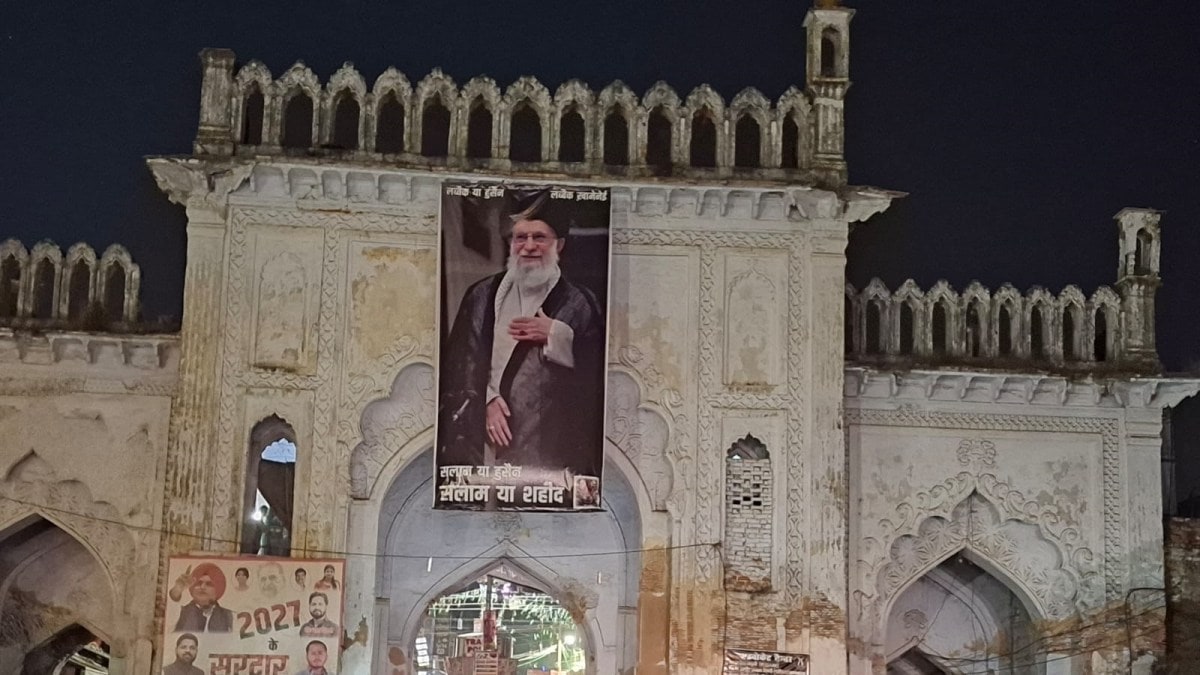
5. The Khamenei Era: Political Leadership and Symbolic Influence
Under Ayatollah Ali Khamenei, who led Iran for decades as Supreme Leader, the Iranian clerical establishment continued to project religious and political influence well beyond its borders. While Khamenei himself had no ancestral links to India, his position as successor to Khomeini placed him at the center of global Shia political discourse.
India’s Shia clerics and communities responded in varied ways to Khamenei’s leadership. Some expressed support for his articulation of Islamic resistance to Western influence and perceived advocacy for Muslim causes. At the same time, others emphasized that religious authority does not automatically translate into political submission, and that Indian Shias must balance their religious commitments with loyalty to the Indian state and its secular framework.
The events of recent years — including political developments in the Middle East — have further complicated these conversations. In parts of India, particularly in regions with significant Shia populations such as Kashmir and Lucknow, Iran’s role is understood both through cultural-religious connections and through geopolitical considerations.
6. The Role of Local Clerics and Scholarship
Another dimension of Shia politics in India is the leadership provided by local clerics who navigate both indigenous traditions and transnational influences. Figures such as Indian-based scholars represent a generation who balance theological teaching with social engagement in their communities. These clerics may have studied in major seminaries abroad, including Qom, yet tailor their guidance to the specific realities and challenges of Indian society.
In many urban centers, Shia scholars engage with their communities on issues ranging from religious observances to social welfare and communal harmony. Their work often emphasizes ethical conduct, peace, and respect for pluralism — aligning with broader Indian values while drawing upon deep Shia intellectual traditions.
7. The Future of Shia Politics in India: Evolving Dynamics
Today, the question for Shia politics in India is not simply which seminary or marja holds more sway, but how local communities interpret and integrate diverse religious influences within the broader secular and democratic context of Indian society. The seminaries of Najaf and Qom both continue to shape theological thought and religious practice, but Indian Shias often exercise independent judgment in choosing whom to follow based on personal convictions and community needs.
This pluralism suggests that Shia identity in India will continue to be influenced by transnational religious scholarship — whether Najaf’s jurisprudence, Qom’s political theology, or the teachings of Indian-based scholars — while grounding itself in India’s unique social fabric.
Conclusion:
The journey from Najaf to Qom reflects more than geographical movement; it represents the evolution of Shia religious authority, political thought, and community identity. While the Iranian clerical establishment has played a significant role in shaping Shia discourse in India — especially after the Islamic Revolution — Najaf’s enduring jurisprudential influence and India’s rich indigenous traditions provide alternative frameworks for understanding faith and politics. For Indian Shias today, religious allegiance is varied, negotiated, and attuned both to global theological currents and the lived realities of Indian society.
Read More at : digisoftron.com